
Why Drilling Tools Fail in High-Temperature Wells - Predictive Engineering Changes the Outcome
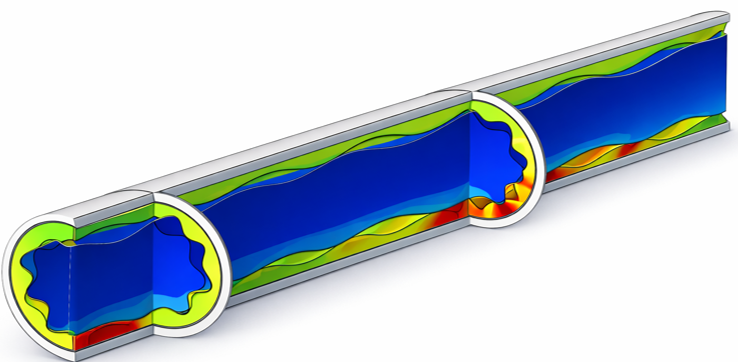
High-temperature drilling environments expose critical gaps in traditional tool qualification. Most tools are still validated through empirical testing, leading to late-stage failure discovery, non-productive time (NPT), and significant cost impact. Predictive engineering enables early failure detection, reduced risk, and accelerated qualification cycles.
The Problem
Drilling tools are typically qualified for performance rather than reliability under real operating conditions. This leads to failures being discovered only after deployment, where consequences include unplanned trips, tool damage, and schedule disruption.
Failure Pathway Model
Temperature-driven failure in downhole motors follows a predictable pathway as seen in the image. The temperature causes thermal expansion, the rate of expansion is different between metals & elastomer, this along with cyclic loading during operations can cause shear stresses and bond weaking resulting in fatigue accumulation and failure.

Predictive Engineering Approach
Physics-based modeling enables simulation of thermo-mechanical interactions, including elastomer behavior, vibration dynamics, fatigue accumulation, and thermal effects. This allows identification of failure modes before field deployment.
Business Impact
Organizations adopting predictive engineering can reduce failure rates by 20–40%, significantly lower NPT, and accelerate product development cycles.
Call to Action
Request a High-Temperature Tool Reliability Assessment to identify failure risks, evaluate qualification gaps, and define a predictive engineering roadmap within 2–3 weeks.