
Digital Twin Architecture Best Practices
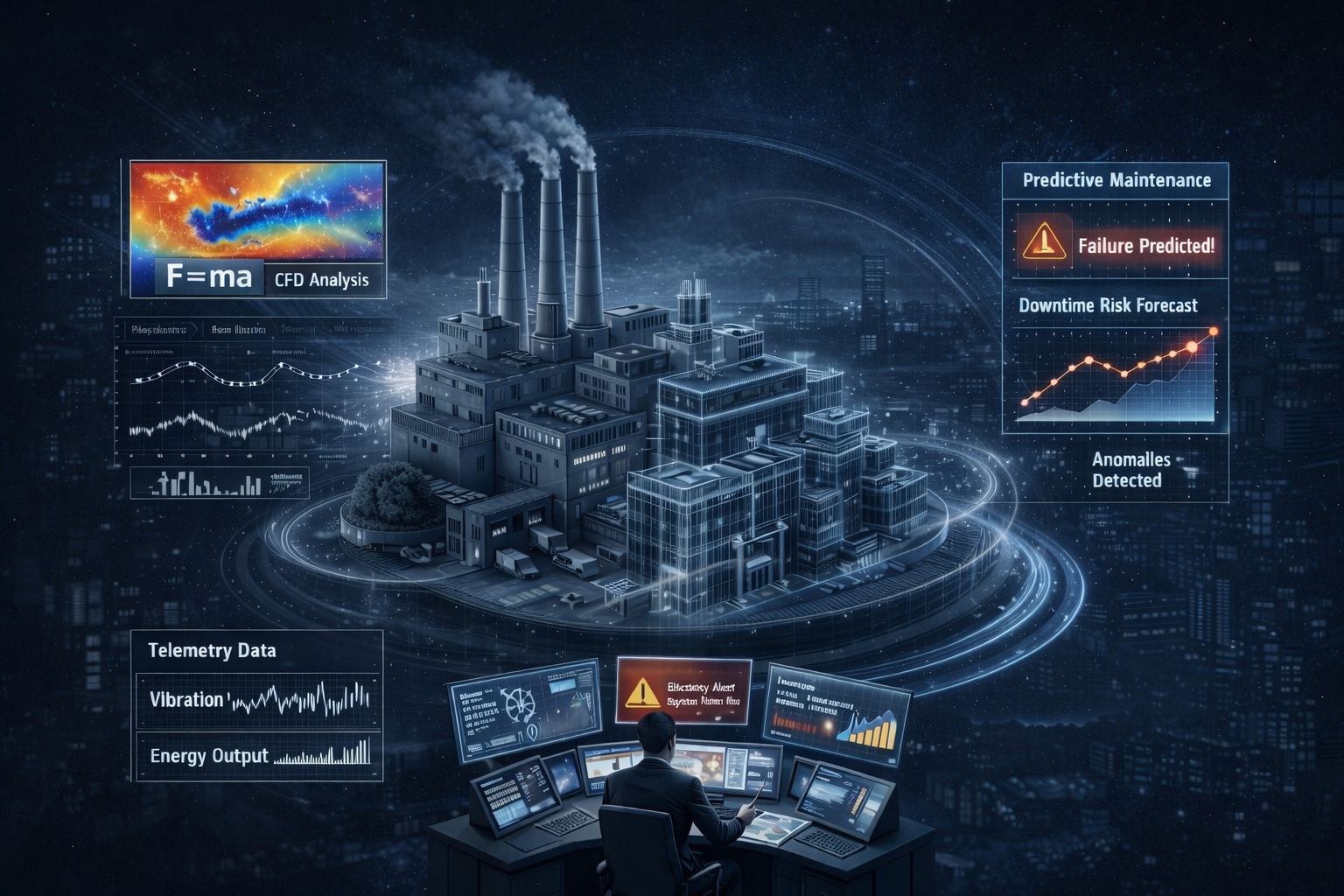
Digital twin architectures determine whether digital twins become revenue-generating operational systems or expensive visualization projects. When designed correctly, digital twin architectures enable faster decisions, lower operating costs, higher asset reliability, and scalable AI-driven optimization across industrial systems. The difference is not tooling it is architectural discipline aligned to measurable business value.
DIGITAL TWIN ARCHITECTURE BEST PRACTICES Digital twins have emerged as a critical capability for industrial organizations seeking to improve uptime, reduce cost, and optimize complex operations. However, many digital twin initiatives stall because the underlying architecture is designed for visualization rather than decision-making. Architecture is where value is either unlocked or quietly lost.
DESIGNING FOR BUSINESS OUTCOMES Effective digital twin architectures are built around business decisions, not data collection alone. The goal is to enable real-time insight, predictive intervention, and confident optimization while scaling across assets without exploding cost or complexity.
DATA ARCHITECTURE AS A VALUE ENABLER A strong data layer enables speed, scale, and economic efficiency. Time-series databases support high-frequency sensor ingestion, graph models capture asset and system relationships, and document stores manage configuration and metadata. Data lakes provide historical context for model training and root-cause analysis. Together, these layers enable faster diagnosis, lower data transport costs, and reuse of data across engineering, operations, and analytics.
REAL-TIME PROCESSING AND EDGE INTEGRATION Value in industrial systems is often lost to latency. Architectures that combine edge computing with cloud processing enable low-latency perception and control while preserving scalability. Edge pipelines handle time-critical decisions such as fault detection or setpoint adjustment, while cloud resources support deeper simulation, optimization, and learning.
PHYSICS-BASED AND HYBRID MODELING Physics-based models anchor digital twins in reality, providing explainability and trust that pure data-driven models often lack. Best-practice architectures balance model fidelity with computational efficiency and support hybrid approaches where machine learning augments physics to improve accuracy, reduce calibration effort, and adapt to changing conditions.
SCALABILITY WITHOUT COST EXPLOSION Scalable digital twin systems are designed to grow without linear increases in cost. Horizontal scaling of ingestion pipelines, distributed simulation execution, and efficient state synchronization allow organizations to expand from single assets to fleets while maintaining performance and economic viability.
SECURITY AND GOVERNANCE BY DESIGN Digital twins often operate on mission-critical systems. Security must be embedded from the start, including end-to-end encryption, role-based access control, audit logging, and secure execution environments. Governance ensures regulatory compliance while protecting intellectual property and operational integrity.
BUSINESS IMPACT OF WELL-ARCHITECTED DIGITAL TWINS Organizations that deploy well-architected digital twin systems consistently achieve measurable business outcomes: 5–15% improvements in asset utilization, 10–30% reductions in downtime, 15–40% reductions in quality losses, and faster engineering and operational decision cycles. Architecture not algorithms is the primary determinant of whether digital twins deliver sustained value.
THE BOTTOM LINE Digital twins succeed when architecture is treated as business infrastructure, not technical plumbing. By aligning architectural decisions with operational and financial objectives, organizations turn digital twins into scalable platforms for revenue growth, cost reduction, and reliability improvement.